Chapter Three — Services

An index of fifteen
areas of practice.

Most engagements draw on several of these at once. What follows is not a menu — it is a reference for what we mean when we say we do a piece of work.

01

Service

Custom software development

Purpose-built systems designed around the specific shape of a business — its data, its users, its constraints — rather than around a template.

What it includes
Discovery, architecture, application development, integration with existing systems, deployment and post-launch care.
Business problems it can address
Off-the-shelf tools that no longer fit, workflows patched together in spreadsheets, systems that require heroic manual work to keep running.
JAM GmbH's approach
We start by writing down the problem in plain language and modelling the domain carefully. Only then does code follow. The system evolves in small, deployable increments visible to the client from week one.
Typical deliverables
A running system, source code, deployment infrastructure, documentation and a handover that leaves the client's team able to extend the software.
Quality considerations
Automated tests, code review, static analysis and observability are part of the build, not steps at the end.

Close-up of typed source code on a dark editor screen

02

Service

Web application development

Modern web applications built on well-understood foundations, with accessibility, performance and long-term maintainability as first-class concerns.

What it includes
Frontend architecture, design-system implementation, application state, server-rendered pages, API integration and progressive enhancement.
Business problems it can address
Slow pages that lose users, accessibility gaps that quietly exclude people, applications that become fragile as they grow.
JAM GmbH's approach
We favour standard web platform features and mature frameworks. We measure real performance on real networks. We treat accessibility as a design property, not a compliance exercise.
Typical deliverables
A production web application, component library, performance and accessibility baseline and monitoring in place from day one.
Quality considerations
Core Web Vitals, WCAG-aligned accessibility, cross-browser and device coverage and clear ownership of the front-end deployment pipeline.
Soft rendered cloud on a warm off-white background

03

Service

Product engineering

Building and evolving a digital product over time, with an eye on both the code and the product decisions that shape it.

What it includes
Product discovery, iterative delivery, feature engineering, experimentation infrastructure and ongoing platform care.
Business problems it can address
Product roadmaps that never quite land, teams that ship features but not outcomes, backlogs where technical debt is treated as a separate category.
JAM GmbH's approach
We work in short cycles with the product owner, favouring narrow, deployable slices over grand releases. Engineering effort and product intent are debated in the same room.
Typical deliverables
A continuously shipping product, decision records, quality baselines and telemetry that describes how users actually behave.
Quality considerations
Instrumented features, deliberate rollout strategies and a shared vocabulary for talking about trade-offs.
Dark abstract security matrix pattern with faint red dots

04

Service

Frontend development

User interfaces that are fast, accessible, resilient and pleasant to work in for the engineers who will extend them next year.

What it includes
Design-system implementation, component libraries, complex interactive interfaces, form and data-heavy screens, motion and micro-interaction work.
Business problems it can address
Interfaces that look inconsistent across the product, components that are copied and diverged, front-ends that get slower with every release.
JAM GmbH's approach
We treat the frontend as a system, not a set of pages. Shared primitives, honest naming, strict types, and a design-system that describes how things are supposed to look and behave.
Typical deliverables
A working interface, a documented component library, a design-token pipeline and a front-end architecture the client's team can navigate.
Quality considerations
Rigorous accessibility, cross-device visual regression checks, and performance budgets enforced in CI.
Floating mobile device mockup with a minimalist interface

05

Service

Backend development

Server-side systems that are legible, testable and safe to change — the load-bearing part of most software companies.

What it includes
Domain modelling, application servers, background workers, queues, data access, transactional guarantees and internal APIs.
Business problems it can address
Backends where behaviour is scattered, where side effects are hidden, where deployments require ceremony, where nobody wants to touch the code.
JAM GmbH's approach
Explicit boundaries between modules, clear separation of the domain from its infrastructure, and tests that describe intent rather than implementation.
Typical deliverables
A backend service with clear seams, migrations, tests, deployment pipeline and operational documentation.
Quality considerations
Meaningful test coverage, structured logging, tracing and predictable behaviour under load and failure.
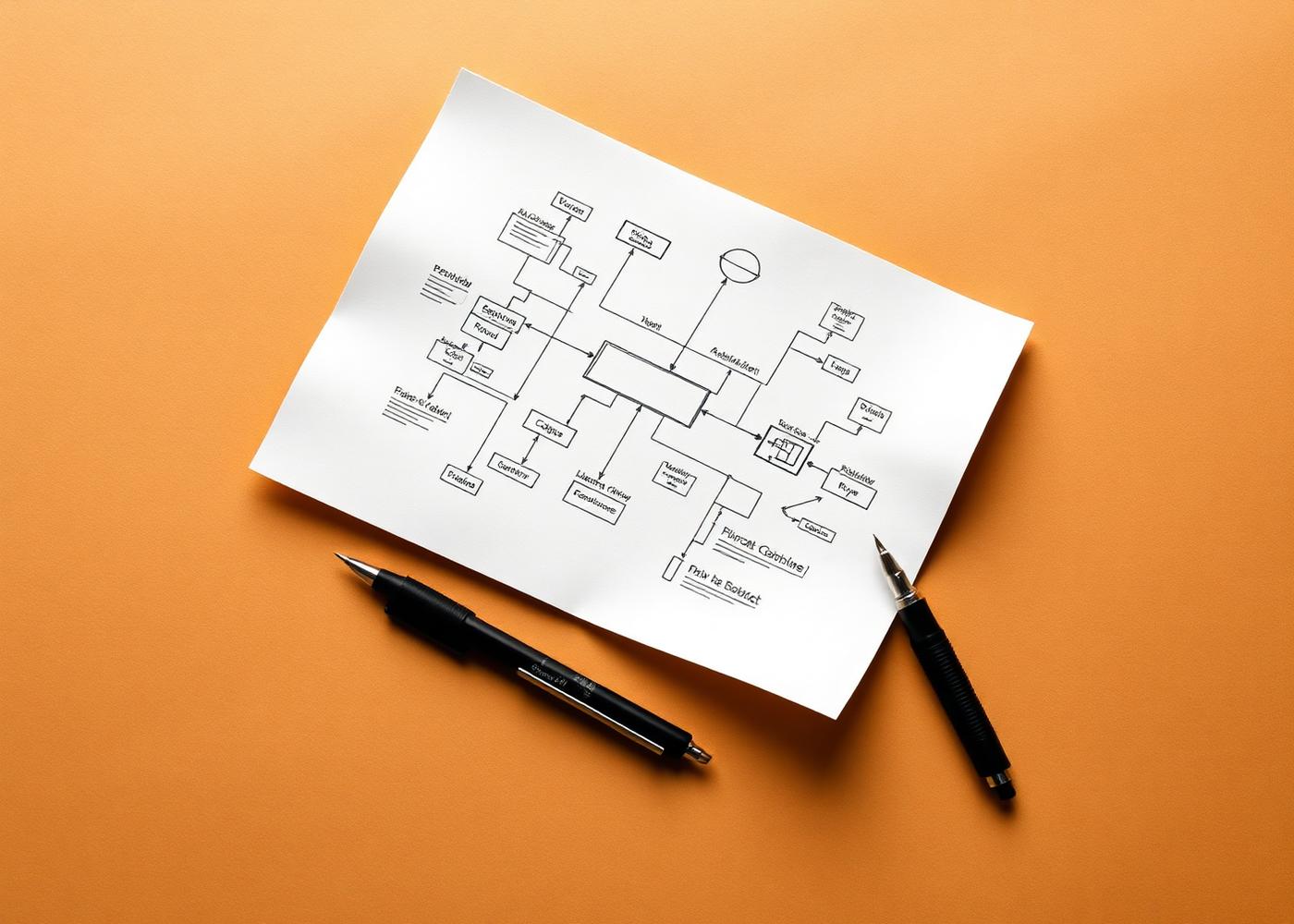
Hand-drawn architectural flowchart on paper

06

Service

API development & integration

APIs designed to be consumed by other humans — clearly named, well documented, and evolvable without breaking every caller.

What it includes
REST and RPC service design, versioning strategy, authentication, rate limiting, third-party integration and API gateways.
Business problems it can address
APIs that are hard to read, integrations that break on every upstream release, opaque errors that cost hours to debug.
JAM GmbH's approach
We treat the API as a product. Contracts are designed with the consumers in the room, changes are versioned deliberately, and errors are returned in a form that a human can act on.
Typical deliverables
A documented API, client examples, a versioning policy and integration test suites against real upstream systems.
Quality considerations
Explicit contracts, generated documentation, backward compatibility discipline and observability across the integration surface.
Abstract network graph on a deep navy background

07

Service

Cloud solutions

Cloud infrastructure that is described in code, understood by the team, and cheap enough to operate at the scale you actually run at.

What it includes
Cloud architecture, infrastructure as code, container orchestration, networking, secrets management and cost engineering.
Business problems it can address
Infrastructure that only one person understands, cloud bills that surprise, environments that drift from each other, deployments that require someone to be awake.
JAM GmbH's approach
Everything the cloud does is described in code and reviewed like any other change. We prefer managed services where they earn their keep and simple building blocks where they do not.
Typical deliverables
Infrastructure repositories, environment parity, automated deployments, on-call documentation and a cost profile the finance team can read.
Quality considerations
Reproducibility, environment parity, cost visibility and clean recovery paths for the worst days.
Illuminated server rack with dense cabling

08

Service

IT consulting

Independent technical advice, from architecture reviews to team-shape conversations, delivered by people who still write code themselves.

What it includes
Technical due diligence, architecture reviews, technology selection, hiring input and second opinions on difficult decisions.
Business problems it can address
Decisions that keep getting deferred, uncertainty about whether a system is fit for the next stage of the business, disagreements inside the team that need an outside voice.
JAM GmbH's approach
We read the code before writing recommendations. We interview the people who will have to live with the decision. Advice is delivered in writing, argued out loud, and left with the client to act on.
Typical deliverables
A written report with concrete recommendations, priorities, trade-offs, and follow-up conversations to help act on it.
Quality considerations
Every recommendation is traceable to something we observed. No generic checklists.

09

Service

Digital transformation

Gradual, respectful modernisation of how a business runs its technology — without pretending that the existing systems do not matter.

What it includes
Assessment of current systems, target architecture, migration strategy, phased delivery and change support for the internal team.
Business problems it can address
Business processes that have outgrown the tools running them, integrations held together by people rather than by systems, ambitious change programmes stalled at the planning stage.
JAM GmbH's approach
We move in small, reversible steps. Every increment leaves the business better off, and no step depends on a distant future state to justify itself.
Typical deliverables
A written strategy, prioritised roadmap, delivered migrations and a team that has been part of every decision along the way.
Quality considerations
Reversibility, honest measurement, and continuous communication with the people whose work is being changed.

10

Service

System modernisation

Careful evolution of legacy systems — replacing what needs replacing, keeping what still works, and improving the parts in between.

What it includes
Legacy audit, incremental refactoring, strangler-fig migrations, data migration and re-platforming.
Business problems it can address
Systems that only one or two people can safely touch, dependencies that block hiring, deployments that require a weekend, features that cannot be added at all.
JAM GmbH's approach
We characterise the system before changing it: how it is used, where it is fragile, what value it still delivers. Then we modernise the parts where change unlocks the most value first.
Typical deliverables
An assessment, a phased migration plan, and delivered increments — each of which is deployable and reversible.
Quality considerations
No big-bang cutovers. Every migration is validated in production shape before it is trusted.

11

Service

Data & analytics solutions

Data systems that stay honest — where the numbers on the dashboard match the numbers in the source, and where nobody has to argue about which report is correct.

What it includes
Data modelling, pipelines, warehouses, transformation layers, semantic definitions and analytical interfaces.
Business problems it can address
Reports that disagree with each other, dashboards that quietly drift out of date, analysts spending most of their time cleaning data instead of interpreting it.
JAM GmbH's approach
We treat data pipelines as software: version controlled, tested, monitored, with clear ownership. Definitions of business terms are written down once and referenced everywhere.
Typical deliverables
A data platform with defined layers, tested transformations, documented metrics and analytical surfaces the business can trust.
Quality considerations
Data tests, freshness monitoring, lineage and a semantic layer that survives contact with the organisation.

12

Service

Quality assurance

QA as an engineering discipline: automated where automation earns its keep, exploratory where human judgement is required.

What it includes
Test strategy, test automation, exploratory testing, performance and load testing, and pre-release release engineering.
Business problems it can address
Slow, flaky test suites that no one trusts, releases that are frightening, defects that only appear once the system is under real load.
JAM GmbH's approach
We design test suites around the value they deliver: catching real regressions, describing intended behaviour, and running fast enough to be part of every commit.
Typical deliverables
A test strategy, automated suites at appropriate levels, load-testing infrastructure and release procedures worth following.
Quality considerations
Tests as documentation, honest coverage discussion, and CI pipelines that stay green because the tests are good, not because they are ignored.

13

Service

Technical architecture

Architecture work that produces systems people can actually build — not slide decks that describe an ideal that never ships.

What it includes
Domain modelling, service decomposition, integration architecture, data architecture and non-functional design.
Business problems it can address
Architectures that look good on paper and fail on contact with the team, systems where every new feature costs more than the last, service boundaries that were drawn without the domain in mind.
JAM GmbH's approach
We work at the whiteboard with the people who will implement the system, keeping the design small enough to fit in a head. Decisions are recorded in short written notes, and revisited as the system teaches us new things.
Typical deliverables
Architecture decision records, diagrams that match the code, and a working reference implementation of the trickiest slices.
Quality considerations
Designs that survive contact with delivery. If an architectural decision cannot be built cheaply, we treat that as feedback.

14

Service

Cybersecurity-focused development

Building software with security as a design property — modelled, tested and revisited, not appended.

What it includes
Threat modelling, secure architecture, authentication and authorisation design, dependency and secrets management, and secure release engineering.
Business problems it can address
Systems whose security posture is unknown, credentials scattered across services, third-party dependencies with unclear provenance, incident processes that only exist in someone's memory.
JAM GmbH's approach
Security is discussed in the first architectural conversation and again in every meaningful change. We assume the system will be attacked, and we build it accordingly.
Typical deliverables
Threat models, hardened services, dependency and secrets hygiene, security-relevant tests and written incident procedures.
Quality considerations
Least-privilege by default, verifiable controls, and a small set of well-understood security invariants the whole team can name.

15

Service

Maintenance & technical support

Ongoing care for the systems we build, and for systems we inherit — because the years after launch are where value compounds.

What it includes
On-call, incident response, dependency updates, performance work, small feature evolution and continuous documentation.
Business problems it can address
Systems that decay because nobody owns them, incidents that are handled but never learned from, small improvements that are always deferred.
JAM GmbH's approach
Maintenance work is planned, budgeted and visible. Every incident produces a written learning; every quarter, a share of engineering time is spent on quiet improvements.
Typical deliverables
A defined support arrangement, regular reporting, ongoing improvements and a system that gets a little better every quarter.
Quality considerations
Predictable response, honest reporting and a preference for durable fixes over quick ones.